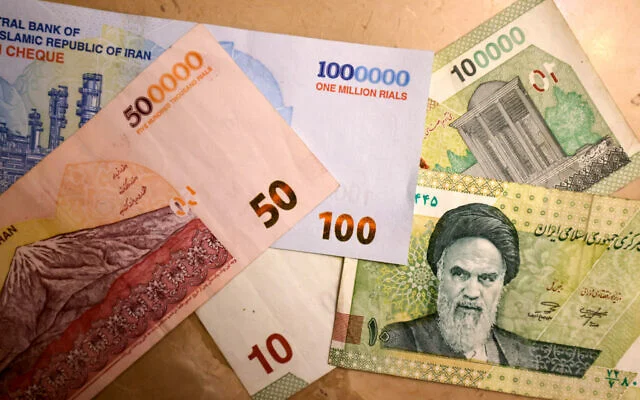
Iran’s economy is facing intense strain as its national currency plunges to a historic low. The sharp decline comes amid an ongoing US naval blockade, escalating geopolitical tensions, and growing uncertainty in global energy markets.
The situation highlights how conflict and economic restrictions can rapidly weaken a country’s financial stability, impacting everyday life for millions.
Iran Rial Falls to Historic Low
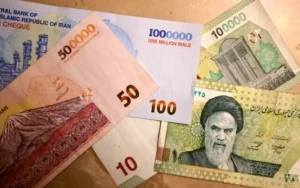
The Iranian rial dropped to approximately 1.80 million rials per US dollar in the black market on Wednesday, according to currency tracking platforms.
- At the start of the war: 1 USD ≈ 1.70 million rials
- Current rate: 1 USD ≈ 1.80 million rials
Although Iran maintains multiple official exchange rates, unofficial market rates are widely used as real indicators of economic health.
Impact of the US Naval Blockade
The US blockade of Iranian ports has significantly disrupted:
- Oil exports
- Trade flows
- Access to foreign currency
As a result, Iran is facing a severe shortage of dollars, leading to further depreciation of its currency.
Energy Crisis and Global Ripple Effects
Strait of Hormuz Closure Adds Pressure
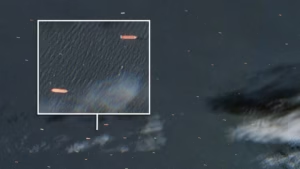
The closure of the Strait of Hormuz, a critical global oil transit route, is having worldwide consequences:
- Reduced oil shipments
- Increased shipping risks
- Rising energy insecurity
German Chancellor Friedrich Merz warned that the disruption is severely impacting Europe’s economy and energy supply.
US Leadership and Strategic Moves
Trump’s Meeting with Oil Executives
US President Donald Trump met with top oil and gas leaders, including Chevron CEO Mike Wirth, to discuss:
- Domestic energy production
- Oil price stability
- Global supply chains
The meeting signals Washington’s effort to stabilize markets amid the crisis.
Iran’s Response to US Actions
Iran strongly condemned the US seizure of its vessels, calling it:
“State-sponsored piracy and terrorism”
Tensions continue to escalate as both sides exchange strong rhetoric and strategic moves.
Russia and OPEC+ Developments
UAE Exit May Shift Oil Market Dynamics
Russia commented on the UAE’s exit from OPEC, suggesting it could:
- Increase global oil production
- Lead to falling oil prices
Russian Finance Minister Anton Siluanov stated that uncoordinated production could reshape the global energy landscape.
Human Rights Concerns Rise
The United Nations reported alarming developments inside Iran:
- 21 executions since the war began
- Over 4,000 arrests on national security charges
These actions reflect growing internal pressure and tightening government control.
Warnings from US Officials
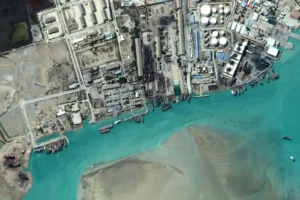
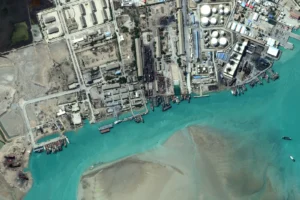
US Treasury Secretary warned that Kharg Island, Iran’s key oil export hub, is nearing capacity due to export disruptions.
This could further strain Iran’s economy if storage limits are reached.
Global Oil Production Overview
Major oil producers continue to influence global markets. Key players include:
- United States
- Saudi Arabia
- Russia
- Canada
- China
Changes in OPEC dynamics and geopolitical tensions are expected to reshape production strategies in 2026.
Conclusion: A Crisis with Global Consequences
The sharp fall of the Iranian rial reflects deeper economic and geopolitical challenges. With the US blockade tightening pressure and global energy markets reacting, the crisis is no longer confined to Iran—it is affecting economies worldwide.
If tensions continue, the ripple effects could include:
- Higher energy prices
- Market instability
- Increased geopolitical risks
The coming weeks will be crucial in determining whether diplomacy or further escalation shapes the future.
Meta Description
Iran’s rial hits a record low against the US dollar amid a naval blockade, escalating tensions, and global energy disruptions. Explore the latest updates and economi impact.
Big causes of currency callapse’
Economic Sanction
united states have strick economic sanction and restrictions imposed .iran access frogin currency and international market
united stated have significantly reduced.
Exports oil for revenu
oil sales have decreased dollar inflow into the country. causes of restrictions depended on oil revenue
Rising Inflation in Iran
purching power or less public confidence in the curreny. Inflation occured in iran steadily.
1. Why has the Iranian rial fallen to a record low?
The Iranian rial has dropped sharply due to the ongoing US naval blockade, reduced oil exports, limited access to foreign currency, and increasing economic uncertainty caused by the conflict.
2. What is the current exchange rate of the Iranian rial against the US dollar?
On the black market, the rial is trading at around 1.80 million rials per US dollar, marking a historic low.
3. How does the US blockade affect Iran’s economy?
The blockade restricts Iran’s ability to export oil and conduct international trade, leading to a shortage of foreign currency and weakening the national economy.
4. What role does the Strait of Hormuz play in this crisis?
The Strait of Hormuz is a key global oil route. Its disruption affects oil supply worldwide, increases shipping risks, and contributes to rising energy prices.
5. Why are unofficial exchange rates important in Iran?
Iran has multiple official exchange rates, but black market rates are considered more accurate because they reflect real supply and demand conditions.
6. How could this crisis impact global oil prices?
Geopolitical tensions and supply disruptions may lead to fluctuations in oil prices. Increased production by other countries could stabilize or lower prices over time.
7. What are the broader global effects of this situation?
The crisis can lead to higher energy costs, inflation, disrupted trade routes, and increased geopolitical instability affecting multiple regions.
8. Is the Iranian economy expected to recover soon?
Recovery depends on several factors, including diplomatic developments, easing of sanctions, and stabilization of oil exports. Without these, economic pressure may continue.